
Could you please tell us, what is FADIA about?
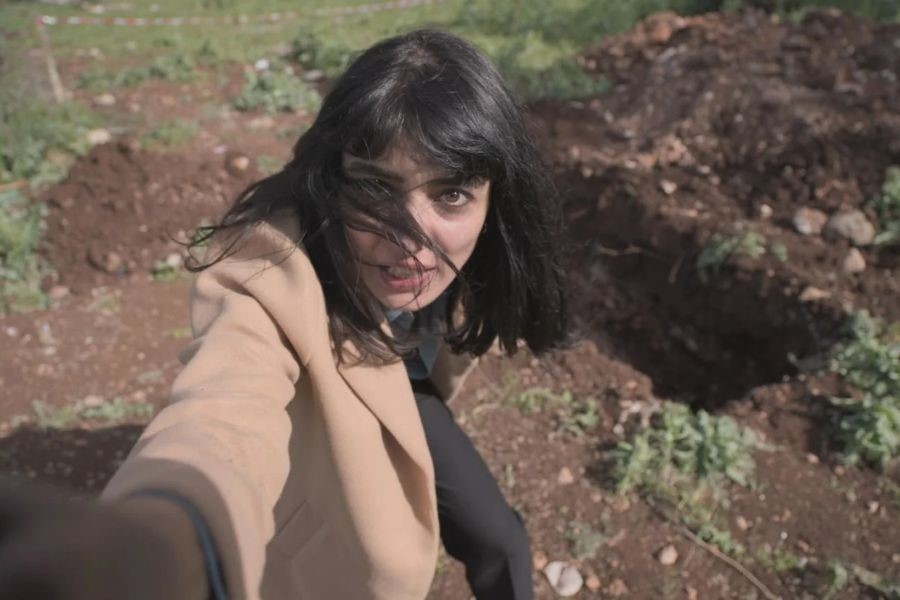
FADIA is a social and psychological thriller about a young Palestinian woman who survives an attempted honor killing by her own family. After being left for dead, she is secretly rescued by her neighbors and hidden in their home. What follows is not simply a struggle to stay alive, but a struggle to reclaim her identity, her dignity, and ultimately her voice.
The story takes place in a conservative Palestinian community in the Galilee. It begins with a video circulating on social media that threatens the family's reputation. What starts in the digital world quickly escalates into real-life violence, driven by public humiliation, social pressure, and the fear of losing one's standing within the community.
But for me, FADIA is not only about honor killings or violence against women. It is about the mechanisms that allow such violence to happen. It is about the silence of families, neighbors, and entire communities. People who know something is wrong but choose not to intervene, whether out of fear, loyalty, or the desire to protect their own position.
I wanted to explore the psychology of that silence and the thin line between being a witness and becoming an accomplice.
Although the story is deeply rooted in Palestinian society, its questions are universal. Violence against women, patriarchal power, social control, and the fear of challenging accepted norms exist in different forms all over the world.
At its heart, FADIA is about a woman who refuses to remain a victim. Her survival becomes an act of resistance.
Why and how was the idea born and brought to life?
I grew up in Nazareth, in a society where, like many other places in the world, traditional ideas about masculinity, family honor, and the role of women were deeply rooted. Growing up as the only boy among four sisters also made me particularly sensitive to the expectations placed on women and the differences between the way boys and girls are raised.
As I grew older, I began questioning these ideas and how societies pass systems of control from one generation to another.
The central question that guided me was both simple and deeply disturbing: How can a young man come to kill his own sister, someone who helped raise him? How can parents become participants in the death of their own daughter? These questions forced me to confront issues of responsibility, social conditioning, fear, and the enormous influence society can have on an individual.
The idea behind FADIA came from a desire to confront these attitudes from within my own society. I believe that as filmmakers, we must have the courage to look critically at our own communities, even when the subjects are uncomfortable.
As a Palestinian filmmaker and citizen of Israel, there is often an expectation that our stories should revolve around the Israeli-Palestinian conflict. Of course, this conflict is part of our reality, but we are also a society with our own internal struggles, contradictions, responsibilities, and human stories.
The project began with extensive research into real cases and conversations with women, activists, and professionals dealing with violence against women. Initially, I considered making a documentary, but I eventually felt that fiction could reach a wider audience and create a deeper emotional experience. As I went further into my research, I realized that the daily reality of a woman living under such circumstances was almost a form of horror. The constant fear, uncertainty, and psychological pressure led me to move away from conventional drama toward the language of a psychological thriller, not to sensationalize the violence, but to reflect the intensity of her lived experience.
My background in theater and my fascination with playwrights such as Shakespeare and Henrik Ibsen also influenced the storytelling. I wanted to combine social realism with psychological suspense and elements of classical tragedy.
Even the name Fadia was a deliberate choice. In Arabic, Fadia is the feminine form of Fadi, meaning "the redeemer" or "the savior." In Christian tradition, Christ is referred to as Al-Fadi, the Redeemer.
Fadia's emergence from the grave is a symbolic resurrection. The grave becomes a metaphor for the silence imposed on women, and her return represents a voice that refuses to remain buried. In a symbolic sense, she carries the possibility of redeeming a society from its own violence, fear, and silence.
The project became an international creative collaboration. My American co-writer, Laurel Hunter, brought a deeply personal connection to the subject and helped us find a balance between cultural authenticity and universal storytelling.
Visually, I had the privilege of collaborating with renowned Hollywood cinematographer Barry Markowitz, a member of the American Society of Cinematographers and the Academy of Motion Picture Arts and Sciences. Barry has worked with some of the most respected figures in American cinema, including Billy Bob Thornton, Robert Duvall, or Rob Reiner. His credits include Sling Blade, The Apostle, and the Academy Award-winning film Crazy Heart, starring Jeff Bridges.
Beyond our artistic collaboration, there was a very meaningful human encounter. When Barry visited me at my home in Nazareth, he spent time with my father. Barry, the son of a Holocaust survivor, and my father, a survivor of the Palestinian Nakba, found a connection through sharing their personal and family histories. Their experiences came from different historical circumstances, yet they were able to listen to one another and recognize each other's pain. For me, witnessing that encounter was a beautiful reminder of our shared humanity and of what becomes possible when people are willing to listen.
What I appreciated most about working with Barry was his ability to approach our local reality without exoticizing it. Together, we wanted the camera to remain emotionally close to Fadia, almost confined within her psychological world, while preserving the authenticity and intimacy of the environment.
My collaboration with editor Naaman Bishara began during the writing process itself. Together, we constantly searched for emotional honesty, precision, and restraint rather than melodrama.
The production brought together Palestinian and Israeli artists and professionals from different religious and cultural backgrounds. For me, this collaboration was meaningful in itself. Despite our differences, we came together around a story that questions violence, power, and silence.
FADIA received different awards and was the big winner at the Monte-Carlo TV Festival in 2026. What does that mean to you?
Receiving the Golden Nymph for Best Film, the Special Jury Prize, and the Best Actress award for Yara Jarrar at the 65th Monte-Carlo Television Festival was an extraordinary moment for all of us.
The Golden Nymph is among the most prestigious international awards in television, and receiving three awards at such an established festival was both an honor and a great encouragement.
What made it even more meaningful was learning that the jury's decision to award FADIA Best Film was unanimous. It was a great honor to meet members of such a distinguished international jury, chaired by the wonderful British actress Lesley Manville, and including actors and writers like Kevin McKidd, Greg Daniels, and Yasmin Finney.
There was also a lovely personal moment at the end of the ceremony when all the winners gathered on stage. I caught the eye of Kurt Russell, who had just received the Crystal Nymph in recognition of his remarkable career. He looked at me and jokingly said, "You're the big man of the show tonight!" Having grown up watching his films, I found myself sharing this unexpected moment with a Hollywood legend. It was a small, spontaneous exchange, but one that I will always remember.
Our international journey began with the mini-series at Seriencamp in Germany, where it was presented as part of the Spotlight: Women in Series program, followed by the international premiere of the feature film version in Monaco.
What moved me most was seeing a story coming from a small Palestinian community in the Galilee connect so strongly with international audiences.
At Seriencamp, a German audience member approached me after the screening and told me that the film had made him cry. Moments like that are as meaningful to me as awards. They confirm something I have always believed: the more truthful and specific a story is to its own reality, the greater its potential to become universal.
Following the recognition at Monte-Carlo, FADIA received international media attention, including coverage in C21Media and, most significantly, a dedicated feature in Deadline's prestigious Global Breakouts section, which explored the project's artistic approach, its Shakespearean influences, and its wider social relevance.
Together with the earlier awards at the Haifa International Film Festival and the Shulamit Aloni Human Rights Award, this recognition has helped bring greater international visibility to the project.
I was particularly happy about Yara Jarrar's Best Actress award. Fadia is an extremely demanding character, and Yara gave her remarkable emotional depth, vulnerability, and strength.
For Palestinian filmmakers, reaching international audiences is not always easy. We face political, financial, and structural challenges, and our stories are sometimes viewed primarily through the lens of conflict rather than as works of cinema.
I hope these awards and the international media attention will open more doors, not only for FADIA, but also for other filmmakers from our region.
And perhaps the most meaningful achievement is that a story about a woman whose voice was meant to be buried has now been heard internationally.
What is the message for the industry and for the public?
I think there are several messages, but they are all connected by one central idea: silence is never neutral when injustice is taking place.
The fact that this interview is being published on November 25, the , makes it particularly meaningful to me.
The United Nations' campaign addressing digital violence against women, and this year's renewed emphasis on justice, protection, and accountability, connect directly with the story of FADIA.
In the film, a video circulating on social media becomes the catalyst for violence against a woman. Technology may be modern, but the attitudes behind that violence are often deeply rooted in patriarchal traditions. Social media has given those attitudes a much larger platform, where public judgment, humiliation, and condemnation can spread within seconds.
We must also question the responsibility of those who participate in this process, whether by sharing content, encouraging hatred, or remaining silent.
In FADIA, we see how an entire community can become part of a violent system, not necessarily because everyone supports the violence, but because too many people remain silent.
While developing the film, I kept thinking about how this silence extends far beyond the community portrayed in the story.
We live in a world where we witness violence, oppression, wars, and human suffering almost every day. We see what is happening, we know what is happening, and yet too often the response is silence, indifference, or the justification of violence.
The moral question is: What is our responsibility when we know that something is wrong?
I believe cinema and TV has an important role here. It cannot solve political conflicts or change deeply rooted social structures overnight, but it can challenge the way we look at the world and encourage us to question what we have accepted as normal.
There is another, perhaps more philosophical idea behind FADIA, one that is deeply connected to the meaning of her name.
As a man who has grown increasingly exhausted by patriarchy, chauvinism, and the endless cycles of violence created by male-dominated systems of power, I sometimes wonder whether humanity has been waiting for the wrong savior all along.
For centuries, across religions and cultures, humanity has been waiting for a Messiah, a redeemer who will rescue us from violence, hatred, and destruction. It sometimes reminds me of Samuel Beckett's Waiting for Godot, where people continue waiting for someone who never arrives.
But what if we have been looking in the wrong direction?
What if the redeemer we have been waiting for is not another powerful man, another warrior, or another masculine figure promising salvation?
What if it is a woman?
This is where Fadia's symbolic resurrection takes on a deeper meaning for me. She returns not with a desire for revenge, but with the determination to reclaim her voice and confront the system that tried to destroy her.
Perhaps our world needs a different kind of leadership, one shaped by compassion, empathy, emotional intelligence, resilience, and the ability to nurture life rather than destroy it.
I am not suggesting that women are inherently perfect or that simply replacing men with women would solve humanity's problems. But after centuries of predominantly male leadership, looking at the world we have created, I think we have the right to ask whether it is time for women to lead us toward a different future.
For the international film and television industry, my message is also about representation and responsibility. We need to give more space to underrepresented voices, support courageous storytelling, and recognize that socially relevant stories can also be compelling, internationally appealing entertainment.
FADIA is a universal story. It speaks about women, power, fear, silence, and the courage to resist.