
Broadcasters have been quick to experiment with this hybrid dynamic, and TF1 has shown a clear interest in psychological deduction. Back in January, the French group tested this ground with Tricheurs, hosted by Arthur on TFX (and TF1+). In that version, three contestants tackled trivia while one secretly played with all the answers in hand to mislead the table. While it proved the potential of the core idea, it was mainly an early trial to see how the audience would react.
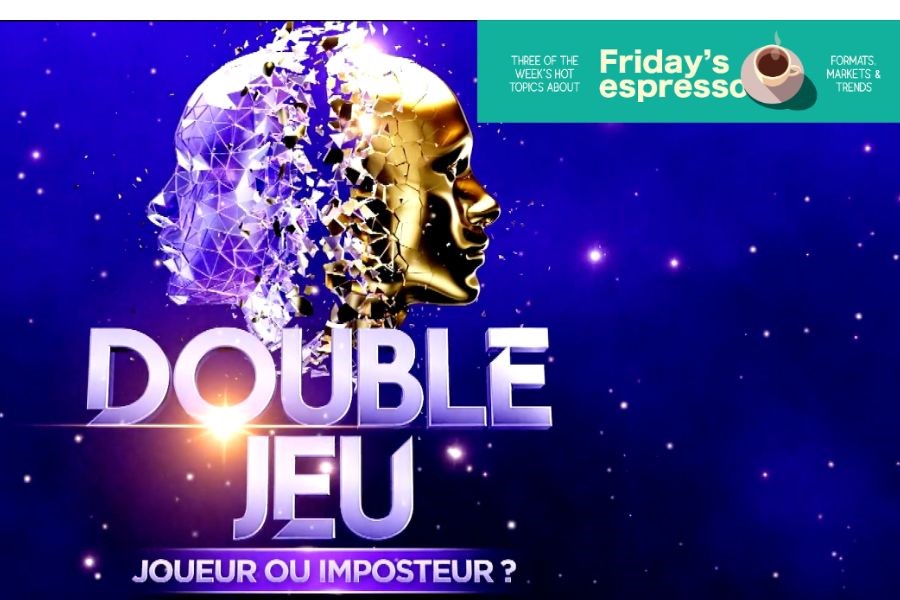
Now, TF1 is bringing the concept straight to its flagship channel. The network premieres Double Jeu: joueur ou imposteur tonight, Friday, October 30th, at 21:10 on TF1, produced entirely in-house. While Tricheurs was an early test, Double Jeu works much better: the pure trivia gameplay and the psychological deduction blend together smoothly, creating a balanced and engaging show.
The show is based on the UK pilot The Imposter, which was presented at the recent MIPCOM. With Double Jeu, France and TF1 become the first market to officially adapt and bring the concept to air.
The core appeal is immediately clear: it does not try to reinvent general-knowledge trivia from scratch, but overlays it with the paranoia and social deduction typical of The Mole and The Traitors. Contestants compete to build a shared prize pot with correct answers, while one player is secretly designated as the Imposter, banking cash whenever incorrect answers are given. After each round, suspicion takes over as players vote to unmask the saboteur.
For the French version, TF1 has adapted the original UK pilot setup for a major prime-time event. To fill a two-hour slot across two specials, the cast has been expanded to eight non-celebrity contestants, adding new question formats, tactical clue rounds, and mechanics designed to keep the tension high throughout the evening.
Ultimately, in today’s rapidly transforming television landscape, one of the most resilient genres remains, surprisingly, the good old quiz show. As one of the most traditional formats in television history, it continues to evolve through fresh interpretations—and this psychological twist is one of its most interesting variations yet.
Quiz shows can change, but they never die!