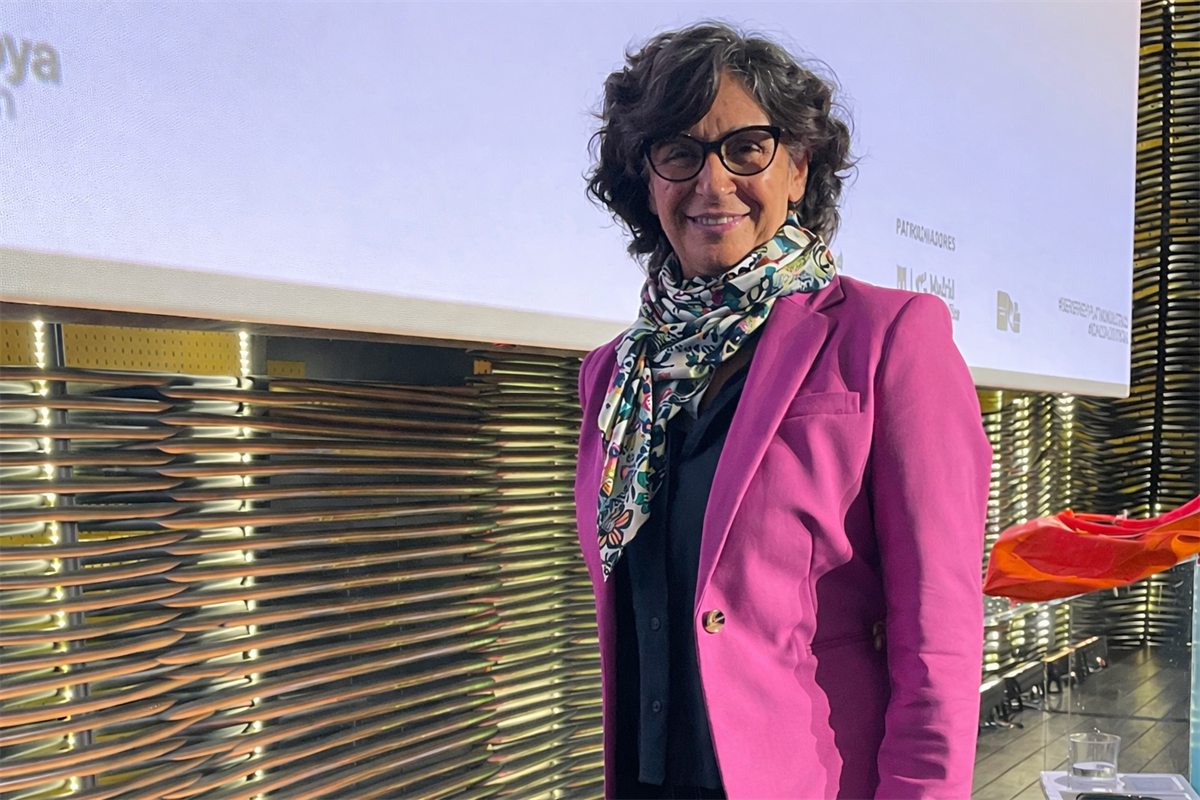

The evolution of women’s roles in the audiovisual industry has never followed a linear trajectory. According to Gloria Saló, Director of Content and Production Consultancy at GECA, the sector is currently facing a moment of stagnation—and in some areas, even regression—particularly when it comes to decision-making positions. “The recent decline in female representation in senior leadership clearly shows that progress is not guaranteed,” Saló states. “Most of these positions are still occupied by men, and although there are exceptions, women are not sitting at the table where decisions are made.”
Saló frames gender equality not as a reputational or ethical add-on, but as a strategic imperative for the industry’s long-term sustainability.“Any company performs better when its leadership reflects the diversity of its environment. Balanced teams strengthen growth and competitiveness,” she explains.
Her perspective is supported by recent data. According to the USC Annenberg Inclusion Initiative, women accounted for just 21.7% of key behind-the-camera roles—directing, writing, and producing—in film in 2024.
More recent figures suggest a troubling reversal. In 2025, the share of female directors in top-grossing films dropped to 8.1%, down from 13.4% the previous year. Similarly, the The Celluloid Ceiling report found that women represented only 23% of key behind-the-scenes roles across the 250 highest-grossing films.
Reflecting on her own career, Saló highlights the structural barriers faced by women entering the industry in earlier decades, particularly the absence of visible female role models.“When you don’t have female references, it is difficult to develop professionally, especially when you are young,” she notes. “At first, you adapt to what exists, and gradually you begin to transform that environment.”
Although she did not have a formal mentor, Saló identifies influential figures such as filmmaker Pilar Miró as a key inspiration, alongside Mercedes Borruel, who supported her entry into international markets.This experience now informs her commitment to mentorship: “That is why I try to mentor whenever I can, from university settings to within the industry.”
Despite ongoing challenges, Saló acknowledges areas of progress, particularly in technical and emerging fields.
“I have been surprised by the number of women working in areas such as artificial intelligence and technical departments, as well as in developing new business models within the creative sector,” she says.
She also points to a proactive mindset among many female professionals: “Often, when I propose a challenge, women not only accept it—they take initiative.”
Speaking in the context of International Women's Day, Saló emphasizes that the continued relevance of the occasion reflects the persistence of systemic inequalities.“Equal opportunities in the workplace still do not exist. The glass ceiling remains, and violence against women continues. The path toward equality has no endpoint—it is an ongoing process that is often interrupted,” she argues.
Saló concludes by underlining the unique responsibility of the audiovisual industry in shaping cultural narratives and societal perceptions.“We build the collective imagination. It is essential that women are present not only in front of and behind the camera, but also signing contracts and making decisions.”
Gloria Saló Warns: Progress on Gender Equality in the Audiovisual Industry Is Not Guaranteed