
Originally created through PUSH to spotlight French television, the Paris Unscripted Showcase has now expanded its international profile. While the broadcaster-led opening session and the partnership with MIP Formats maintained a strong French identity, the wider programme featured companies from Europe, the UK and the US, including new participants such as Talpa Studios and Fulwell Entertainment.
One of the clearest trends was renewed interest in singing competitions. Yes Yes Media presented Who’s in the Band?, an ABC format with Simon Cowell attached and filming expected in early 2027. The show brings back a more direct, old-school style of judging and could become an important signal for broadcasters still cautious about investing in new talent-show concepts. Talpa Studios introduced Sing with Me, which refreshes the audition phase by having judges join contestants on stage for duets, turning their support into a visible performance moment. Dreamspark’s Let Me Sing plays with speed and attention span, giving contestants only ten seconds to impress before they can earn up to 90 additional seconds on stage. WeMake’s Be the One adds a more combative structure, with hopefuls choosing which rival contestant to challenge in a head-to-head singing battle.
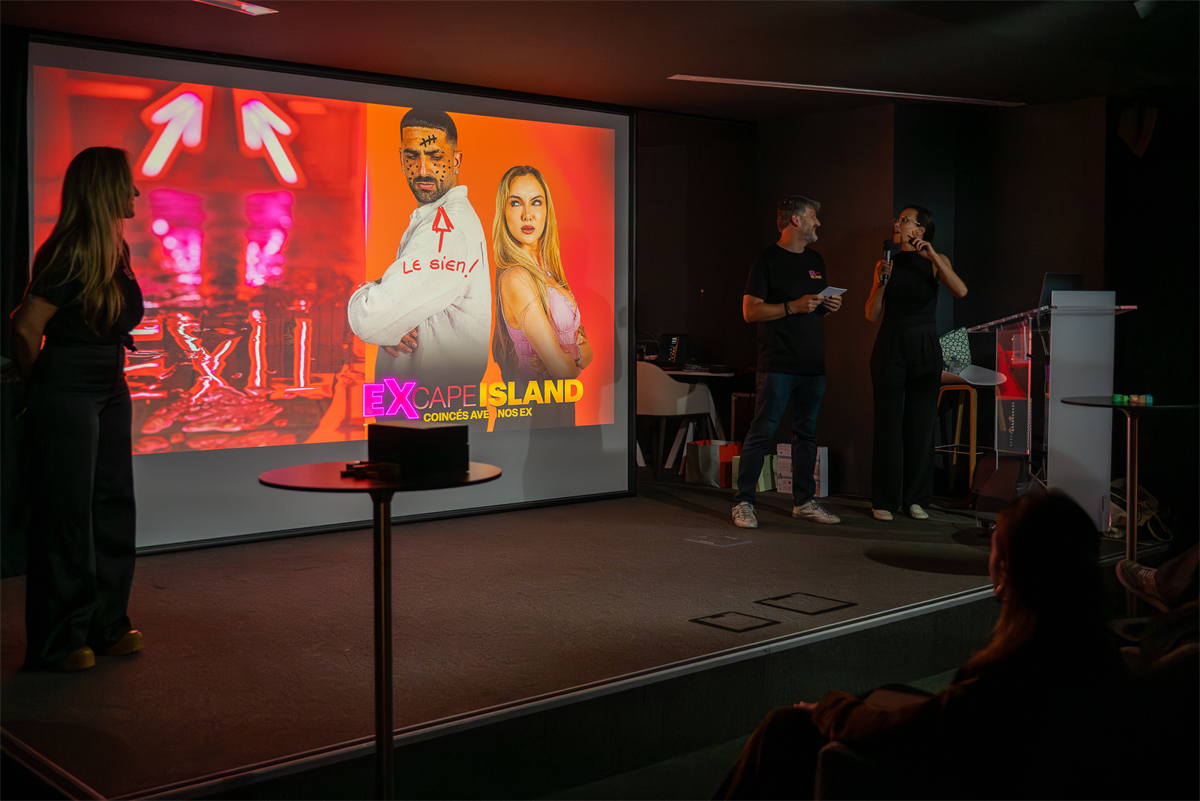
Dating formats were also prominent, with a more provocative tone than traditional romance. Satisfaction’s Excape Island, produced by Ah! Production and recently launched on TFX, stood out with its “show you don’t want to win” premise. The daily reality format sends 12 reality stars to a Marbella villa expecting a luxury holiday, only to discover that they must compete with their exes in games of trust, strategy and communication in order to escape and win prize money. Sony’s Tunnel of Love, already sold into Mexico and supported by a production hub in Brazil, separates pairs of best friends into two houses, where they must arrange dates for each other by choosing from the singles they are living with. WeMake’s The Price of Love tests whether a new romance can resist the temptation of a rapidly increasing cash prize, while Dreamspark’s controversial Rated for Love introduces a “Love Index”, ranking couples’ physical appearance through a panel of strangers and then separating them according to their scores.
Game shows dominated the slate, with the market favouring physical, intuitive and intergenerational formats over classic studio quizzes. Primitives’ The Golden Eggs, recently boosted by interest around a non-broadcast NBC pilot, has evolved into a faster-paced game built around pop-culture items and risk. Dori Media’s similarly titled The Golden Egg takes a different route, using up to 100 giant eggs to test contestants’ appetite for risk and reward. All Right Media’s Norwegian comedy competition Silly Santa brings a seasonal twist, with contestants taking part in eccentric Christmas challenges set by Santa, who is secretly controlled by three celebrities hidden in a control room.
Can’t Stop Media continued to promote Hold On to Your Seat, following its successful first run on Telecinco in Spain. The format is now being hubbed in Uruguay for Latin American territories, with a major European pilot also in production. Sony highlighted Piensa Rápido, the Spanish-language version of America Says, in which teams of friends and family race to complete incomplete phrases by guessing the most popular answers. Satisfaction’s Brick by Brick combines trivia with physical construction: contestants answer questions to win bricks, then stack them into the tallest tower, while rival teams can sabotage them with difficult pieces.
Auction-based formats also appeared, confirming the continued appeal of accessible factual-game hybrids. Dori Media’s The Auction, recently adapted in Italy after its first run in Peru, invites contestants into the auction room, while All Right Media’s Hammer Time features people bringing in personal objects to be valued by experts before deciding whether to go to auction. Existing IP remained another strong route into the market: Fulwell’s Grab the Mic adds music-game energy, Dreamspark’s That’s My Chair turns musical chairs into a supersized entertainment format, and WeMake is developing adaptations based on the party game Top Ten and the observation board game Dobble.
Reality formats were less dominant than at other recent markets, but youth-skewing and interactive concepts stood out. Dreamspark highlighted Dirty Players, the recent TFX daily reality competition, underlining its production efficiency, and also presented the paper format Safe Zone. In the latter, six celebrity pairs enter a central hub and must leave it to complete challenges before the gates close; the further they go, the harder the task and the higher the reward. Signal.Stream made an impact with Most Wanted, a real-time chase format already sold to nine territories, including the US. The show’s key strength lies in audience interaction, as viewers are encouraged to choose sides while contestants are publicly exposed at events across the country.
In factual entertainment, the focus shifted to personal transformation and self-discovery. Can’t Stop Media unveiled its acquisition of BBC Two’s Pilgrimage, an eight-year-old format that follows celebrities from different backgrounds as they undertake ancient pilgrimage routes, combining physical challenge with conversations about faith and spirituality. All Right Media presented Drop Out Resort, produced by Vincent TV for NPO Start, in which ten young people aged 18 to 23 who did not finish high school are given a second chance through an internship at an all-inclusive resort in Curaçao. The show has become NPO Start’s biggest streaming hit and is already moving toward a second season and international adaptations.