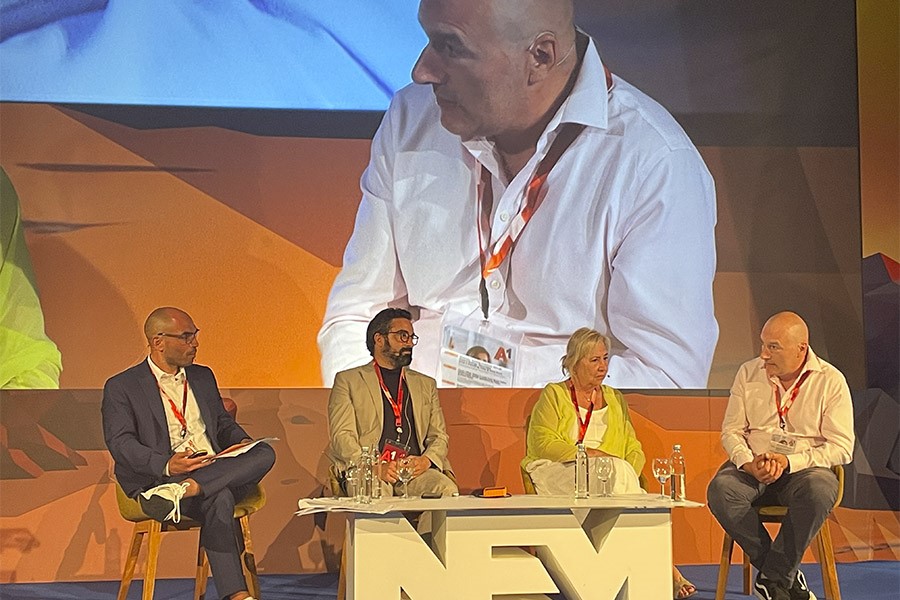

The 13th edition of NEM Dubrovnik launched in Croatia with a massive 50% expansion in market footprint, drawing executive representatives from 300 media companies. The opening discussions focused heavily on the structural shift from competition to cooperation between traditional networks and international streaming platforms. Christian Grece (European Audiovisual Observatory) explained that broadcasters and streamers have transitioned "from rivals to partners" to capture younger demographics, though Guy Bisson (Ampere Analysis) warned this creates a "secondary problem" on alternative platforms because "the value of advertising is considerably lower." Industry advocate Grégoire Polad (ACT) pointed out that regulatory asymmetries hinder commercial networks, while Sanja Božić-Ljubičić (NEM) highlighted CEE's regional disparities, noting that global players like Netflix often tell smaller nations, "we don't come to regions where we don't plan to produce."
On the distribution front, a dedicated panel examined the parameters of buyer-seller negotiations. Representing public broadcasting, Rahela Štefanović (HRT) clarified their distinct acquisition mandate: “As a public service media organization, we don't chase numbers; we chase impact.” She urged distributors to adapt to rigid public budgets, noting that while "doing business with us can sometimes be challenging," prepared sellers can achieve great results. From a commercial standpoint, Igor Draguzet (CME) argued that successful monetization depends on custom-tailored proposals rather than "just a generic pitch from their catalog." Meanwhile, global executive Rodrigo Nascimento explained how Globo leverages its massive scale to secure non-disposable B2B partnerships across 160 territories, stating, “we have to shape our creative output to reflect all of that diversity." Jan Maxa (FTV Prima) concluded that the real key to navigating the CEE market "is to thoroughly understand the local culture."
New Launches
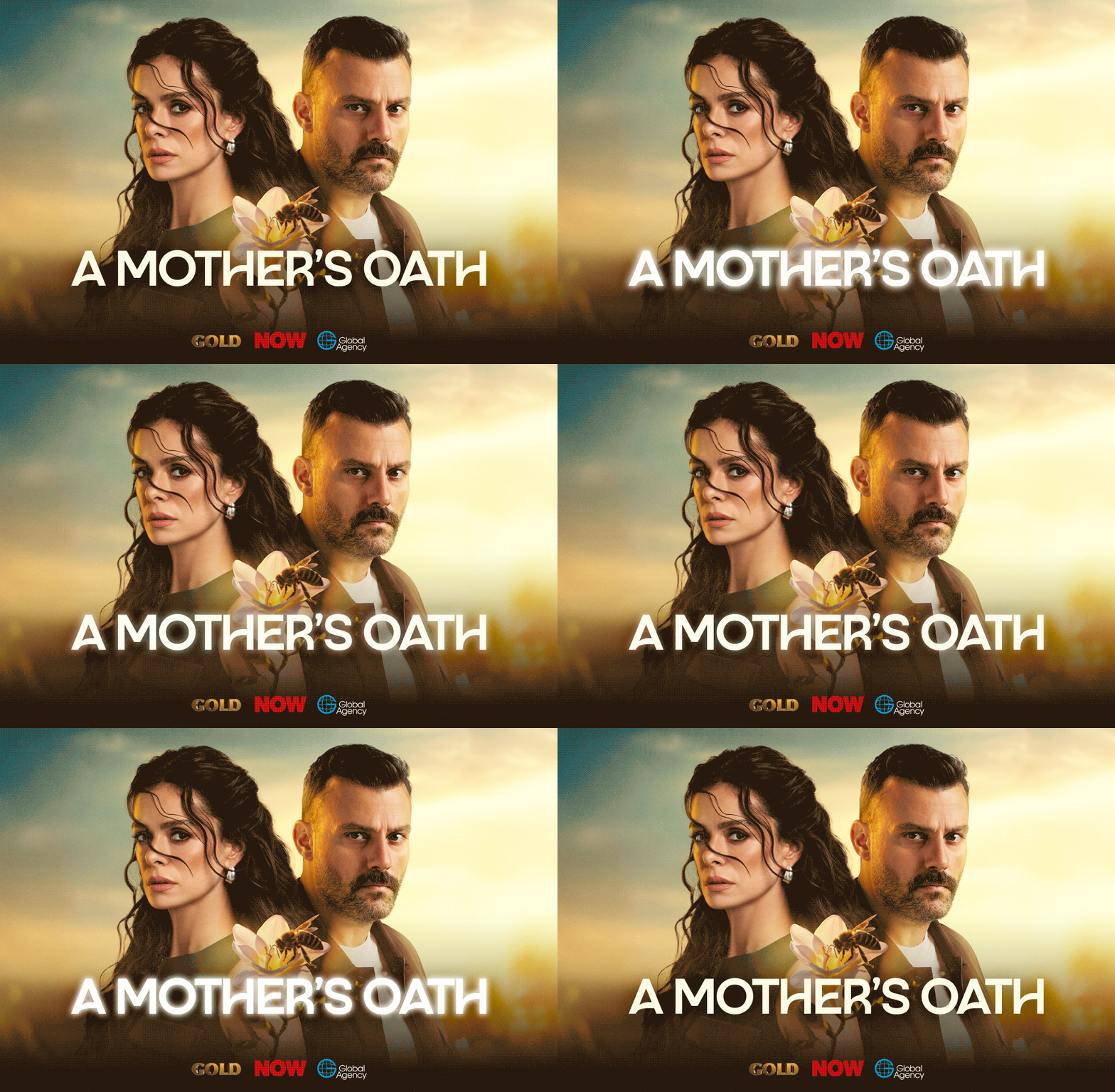
The opening showcase also highlighted high-impact product launches aimed at global distribution. Global Agency spotlighted “One Night Only”, its brand-new premium adaptation of the legendary drama “1001 Nights”. Reflecting on the IP's global reach, Şenay Taş (Global Agency) noted that the original story “opened up Latin America for an audience that totally fell in love,” breaking long-standing regional resistance to Turkish content. Concurrently, Globo detailed its multi-platform approach, showcasing its domestic phenomenon “Anything Goes”, where the audience engagement is so high that "the lead character has literally become an influencer now," according to Karen Pinho (Globo). To capture mobile-first consumption habits, Pinho also confirmed an aggressive pipeline for vertical format programming, announcing, “we will launch more than 50 titles by the end of this year.”
Strategic Alliances, Targeted Content, and Distribution Strategies Take Center Stage at NEM Dubrovnik