

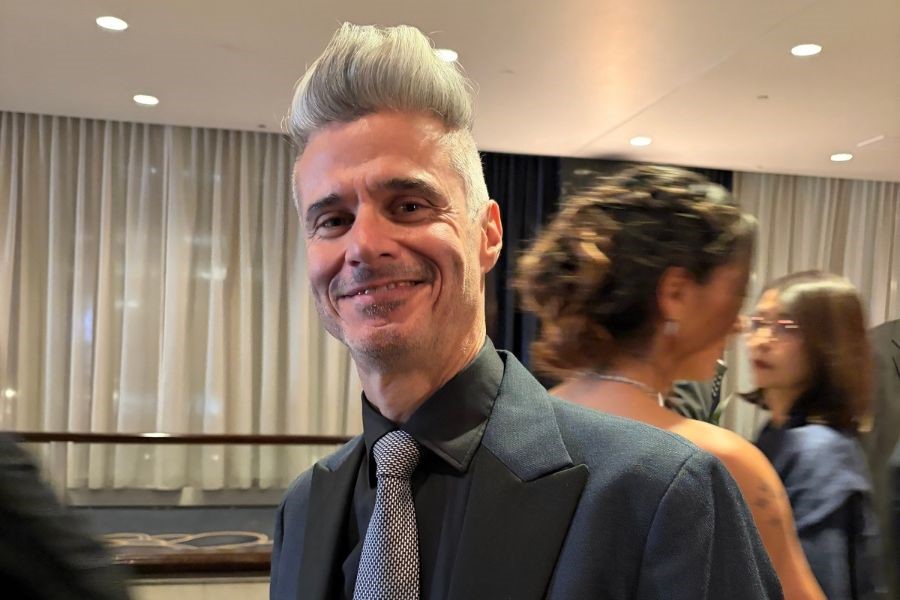
From the living room to the bathroom, the renowned media cartographer explains why the future of television lies in understanding the whole consumer, rather than simply chasing ratings and subscribers.
Formatbiz met renowned media cartographer Evan Shapiro in New York on the occasion of the 54th International Emmy Awards. Shapiro has increasingly become something of a North Star for the bewildered sailors of the television industry, desperately searching for a course through an increasingly fragmented media universe, where the television set is losing ground to the smartphone and content is increasingly consumed vertically, alone and, quite literally, on the toilet.
Provocative, entertaining and armed with an impressive amount of data, Shapiro once again challenged the traditional assumptions of the television business. Because if YouTube is television, the industry must first understand who its customers are, where they spend their time and what drives their attention.
Here are the key takeaways from his latest analysis of the global media ecosystem.
The smartphone is the remote control of our lives
Shopping, education, healthcare, travel and entertainment are increasingly managed through a single device: the smartphone. The consumer, rather than the broadcaster or the platform, is now at the centre of the media universe.
According to the figures presented by Shapiro, approximately 81% of the world's population is under 55. In the United States, the figure stands at 70%, while in Europe it represents around two-thirds of the population, rising to 85% in Latin America.
These generations will not suddenly adopt the media habits of their parents and grandparents as they grow older. On the contrary, their behaviour is already reshaping the entire industry.
Streaming alone has not replaced television
One of the industry's biggest misconceptions was that streaming would replace linear television on a one-to-one basis, both in terms of audience and revenue.
Instead, streaming and social media have jointly captured the attention and spending previously dominated by traditional television.
YouTube, which Shapiro described as the number one television channel in the United States, represents a radically personalised form of television, offering a different programming experience to every individual user.
Meanwhile, premium subscription streaming is showing signs of experiencing the same structural challenges that have affected the American pay-TV business over the past two decades.
Advertising is back at the centre of the business
Shapiro highlighted 2026 as a turning point, with global media advertising revenues overtaking subscription revenues. Subscriptions will remain an important component of the business, but advertising is expected to generate much of its future growth.
For media companies, the challenge is therefore not simply to acquire subscribers, but to build a diversified ecosystem capable of monetising attention across multiple platforms and consumer touchpoints.
From prime time to toilet time
Perhaps the most entertaining — and revealing — part of Shapiro's presentation concerned where audiences actually watch video content. His research across 23 markets, including the major European territories, the United States, Brazil, Mexico, India, Japan and South Korea, revealed that:
- The bedroom, rather than the living room, is the most frequently cited video consumption location in the majority of the markets surveyed.
- In the United States, waiting in line ranks third, while the bathroom ranks fifth.
- Among British Gen Z consumers, the bathroom rises to third place.
- In the United States and the United Kingdom, smartphones outperform television sets by approximately two to one as consumers' primary video device.
- In markets such as Brazil, Mexico and India, the gap is even wider.
- Germany represents an exception, with smartphones and television sets remaining broadly on a par.
The television set remains central to the premium viewing experience, but the smartphone is becoming the gateway to audiovisual entertainment throughout the day.
For broadcasters and producers, the implication is clear: competition for audiences no longer takes place exclusively during prime time. It takes place on the bus, in the bedroom, at work, while waiting in line and even in the bathroom.
YouTube and TikTok are not just for children
Shapiro's research into unduplicated attention across screens places YouTube first and TikTok second among US audiences aged 13 to 54. In the United Kingdom, YouTube also leads, followed by TikTok, Netflix and Instagram.
Social media is not simply an alternative distribution channel. It is increasingly where audiences discover premium television content, often through creators who have already established a relationship of trust with their followers. A television series may ultimately be watched on a streaming platform, but the decision to watch it may have been made on TikTok.
“This new user-centric era is not going to be led by CPMs or rating points. It's going to be led by loyalty, community, fandom, love, affinity,” Shapiro explained.
Shapiro pointed to the rapid transformation of China's microdrama industry, which has moved towards advertising-supported business models, as well as the growing competition from free premium content distributed through YouTube and TikTok. Among the examples he highlighted was Channel 4's The Guest List, a vertical scripted series targeting Gen Z audiences, fully sponsored by beauty brand Sol de Janeiro and distributed across social platforms.
The BBC, Netflix and Disney are also increasingly exploring the vertical video space.
For established producers, the opportunity lies in bringing their storytelling expertise, production values and extensive content libraries into an ecosystem that has traditionally been dominated by independent creators.
The traditional television industry needs to abandon the distinction between television audiences and social media audiences. They are often the same people, consuming different forms of entertainment on different screens throughout their day.
The challenge is to understand the Whole Consumer and build a business around their behaviour.
Shapiro concluded with a message that could serve as a compass for the entire industry:
“Redefine broadcast. Look for the whole consumer. Follow where they go, and you will never, ever go wrong.”