
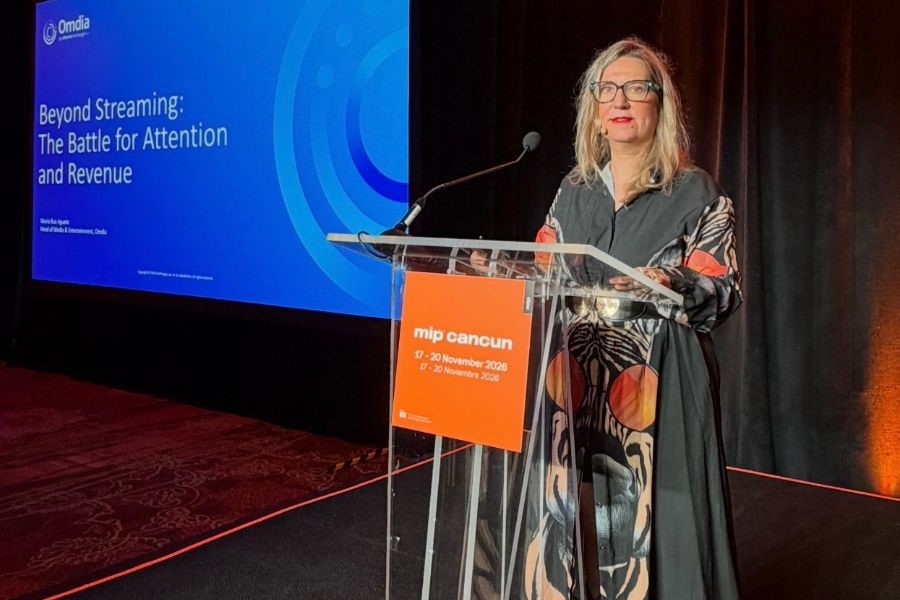
New Omdia research presented at MIP Cancun (November 17-20, 2026) reveals a different streaming landscape in Latin America, raising important questions about content investment, storytelling and the future of international distribution. As the global television industry increasingly focuses on YouTube's growing influence, new research presented by Omdia at MIP Cancun on November 17 offers a different perspective. In four major Latin American territories, Netflix viewers are spending considerably more time on the streaming platform than YouTube viewers spend on YouTube.
But beyond the competition between two global giants, the findings
raise a more interesting question for the international television business: is
the industry moving too quickly towards digital-first consumption models while
underestimating the enduring value of premium storytelling?
Latin America Is Not Following the US Playbook. According to Omdia's analysis of Digital i data covering the first half of 2026, Netflix leads YouTube in average daily viewing time among users of each platform in Colombia, Mexico, Argentina and Brazil.Colombia records the widest difference, with Netflix viewers spending an average of 133 minutes per day on the platform, compared with 78 minutes for YouTube viewers.In Mexico, Netflix reaches 127 minutes against YouTube's 95 minutes. Argentina follows a similar pattern, with 126 minutes for Netflix and 99 for YouTube, while Brazil records 111 minutes versus 87.The situation is reversed in the United States, where YouTube viewers spend an average of 112 minutes per day on the platform, compared with 87 minutes for Netflix viewers.These differences challenge the idea that US audience behaviour can serve as a universal blueprint for global streaming strategies.
Importantly, the figures measure viewing time per user of each
service rather than total audience reach or aggregate viewing across the
population. They offer a comparison of engagement intensity, not overall market
dominance.

What This Means for Producers and Distributors
Latin America has a longstanding tradition of scripted storytelling, from telenovelas and daily dramas to internationally successful series and entertainment formats. The region has also demonstrated its ability to develop local stories with international appeal.Netflix's sustained investment in regional productions provides an important context for understanding these figures.The company has continued to expand its production activities and local presence in key territories, including Mexico and Brazil, while strengthening its pipeline of original series, films and entertainment programming.The figures do not establish that local originals alone explain Netflix's higher viewing time. Nevertheless, they reinforce a strategic question for content creators: how much of the competition for audience attention depends on the strength of the stories themselves?
For independent producers, distributors and format owners, the distinction matters.In an industry increasingly focused on short-form video, creator-led entertainment and algorithm-driven discovery, professionally developed intellectual property may still offer significant value through extended viewing sessions, repeat engagement and international exploitation.
Two Platforms, Two Different Content Economies
Netflix and YouTube represent different approaches to content creation, distribution and monetisation.
Netflix's subscription-led model, increasingly complemented by advertising, relies heavily on acquiring, commissioning and retaining content capable of sustaining audience engagement. YouTube, meanwhile, operates a broad ecosystem that combines user-generated videos, professional productions, podcasts, livestreaming, short-form programming and increasingly sophisticated creator-led formats.Rather than seeing the two as direct substitutes, producers should consider how their different business models create distinct opportunities for intellectual property.
A scripted series may generate substantial engagement on a subscription platform, while short-form adaptations, behind-the-scenes content and creator collaborations can help expand its visibility across social and video platforms.The opportunity may lie less in choosing between Netflix and YouTube than in understanding how content can be developed, financed and distributed across both environments.
A Warning Against One-Size-Fits-All Content Strategies
The findings also arrive at a significant moment for the international television industry. At MIP Cancun 2026, discussions around the creator economy, digital-first programming, advertising-supported streaming and new distribution models are taking centre stage. Yet Omdia's figures suggest that audience behaviour remains deeply influenced by regional consumption patterns.For international distributors and production companies, this is an important reminder that strategies developed around the US market cannot automatically be replicated elsewhere.Content investment decisions need to take account of local viewing habits, cultural preferences and the different ways audiences engage with entertainment.
As Maria Rua Aguete, Head of Media & Entertainment at Omdia,
observed, reach and engagement are not the same thing.
The Future Is Not Simply Short-Form. The rapid development of microdramas, vertical storytelling and social-first entertainment is creating new opportunities for the television industry. But the latest Omdia findings suggest that these developments should not automatically be interpreted as evidence of declining demand for longer-form professional content.The success of one viewing model does not necessarily come at the expense of another.For producers and distributors, the challenge is to identify the right storytelling structure, distribution platform and business model for each market.Perhaps the most significant message from MIP Cancun is that the future of television will not be determined by a single platform, format or viewing habit.
It will depend on the industry's ability to understand audiences
market by market and to develop intellectual property capable of creating value
across an increasingly fragmented entertainment ecosystem.