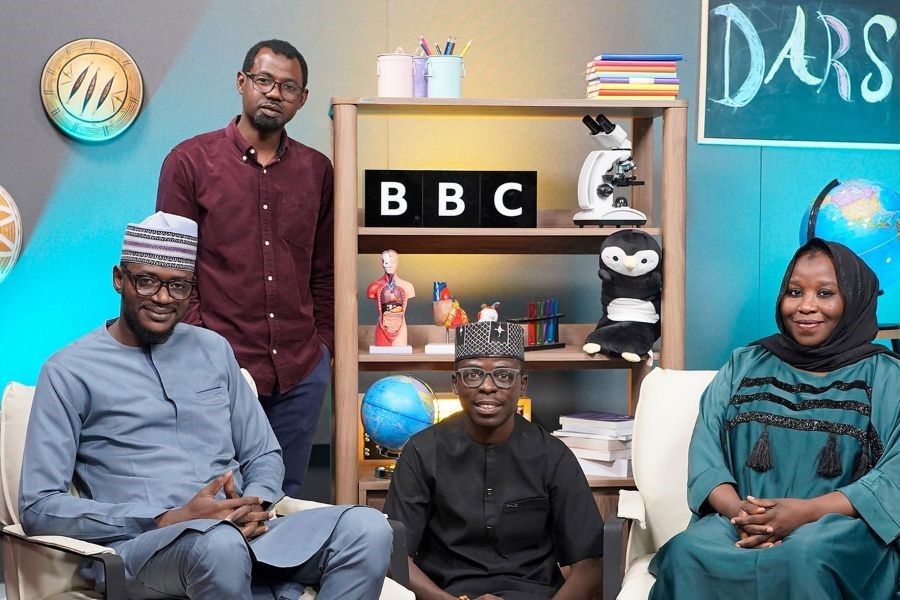

BBC World Service's educational programme, Dars, launches in a fifth language to reach children across West Africa. The programme which is currently available in Dari, Pashto, Arabic, and Nepali, will now be available in Hausa. Dars Hausa will share lessons in English, maths, and science, with additional learning on mental health and inspirational stories. Dars has broadcast over 700 lessons to deliver accessible learning to children in urgent need due to conflict, displacement and restricted access to education. Across the breadth of Dars output, lessons have been delivered in preparedness for disasters, media literacy, AI, first aid, geography and history.
Dars, which means ‘Lesson’ in Dari and Pashto, was first launched in Afghanistan in 2023 to bring learning to Afghan children who are unable to go to school. Since 2021, the Taliban has barred girls from attending secondary school in Afghanistan.
Since the programme’s launch, Dars lessons have been viewed over 14.5 million times across BBC Dari, BBC Persian and BBC Pashto’s social media channels, including YouTube, Facebook and Instagram. Dars is also available via TV and radio, a vital platform for this audience.
In February 2025, BBC News Arabic launched Dars Arabic, supporting learning for children in the Middle East and North Africa. Since its launch, content from Dars Arabic has been seen over 5.5 million times across BBC Arabic’s digital platforms.
Dars content has also been broadcast as part of the Nepali Lifeline service since October 2026, supporting communities affected by the devastating flash floods in central Nepal. Building on the existing success of Dars, BBC World Service now launches Dars Hausa, the lifeline learning offer for Nigerian children who are missing out on education. Dars Hausa will be produced by BBC News Hausa from the BBC’s bureau in Abuja.
Nigeria faces a severe ‘learning crisis’ (UNESCO). Most of the country’s out of school children come from northern Nigeria, where attacks on schools and mass abductions have become commonplace.
Dars has had a significant impact on young people without access to formal education globally.
BBC World Service Expands Dars to Hausa, Reaching 700 Educational Lessons