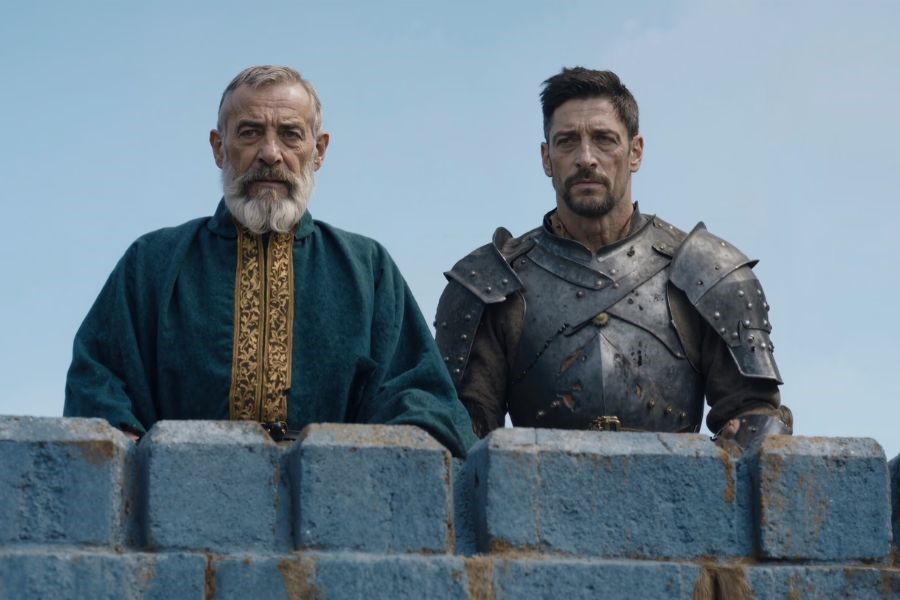

Turkish production house Ay Yapim is pushing further into artificial intelligence with Castle Walls, a new series developed and produced using a wide range of generative AI technologies. Developed over the course of a year, Castle Walls is described as one of the industry’s first AI-generated series and combines Ay Yapim’s established approach to storytelling with an end-to-end AI-driven production workflow.
The project was created using a combination of leading AI platforms covering different stages of development and production. ChatGPT was used for prompt enhancement and creative refinement, while MidJourney supported visual exploration and concept development. Character integration involved Runway and Google Nano Banana, with Veo, Kling, ComfyUI and Topaz contributing to video generation and cinematic execution.
For voice production and dubbing, the team also used Runway and ElevenLabs.
Alongside these third-party platforms, Ay Yapim’s dedicated AI division, AI YAPIM, developed proprietary technology specifically for the project. This includes AI Yapim Storyboard, a custom-built tool designed to support storyboarding and the production pipeline.
A central element of the workflow is AYDNA 1.0, Ay Yapim’s proprietary video diffusion model. The system was fine-tuned using the company’s licensed catalogue and directly powers parts of the video-generation process, with the aim of maintaining a recognizable and consistent Ay Yapim visual style across different scenes.
The project illustrates how established television producers are beginning to integrate generative AI not simply as an experimental tool, but across multiple stages of professional content creation, from development and visualization to video production, character consistency and dubbing.
Castle Walls is expected to premiere later this year on Turkish free-to-air television as well as on a global streaming platform, giving the project both a domestic and international launch.
For Ay Yapim, the series marks a significant step in exploring how proprietary AI models and commercially available generative tools can be combined with traditional production expertise to develop new forms of scripted entertainment.
Ay Yapim Unveils AI-Generated Series Castle Walls