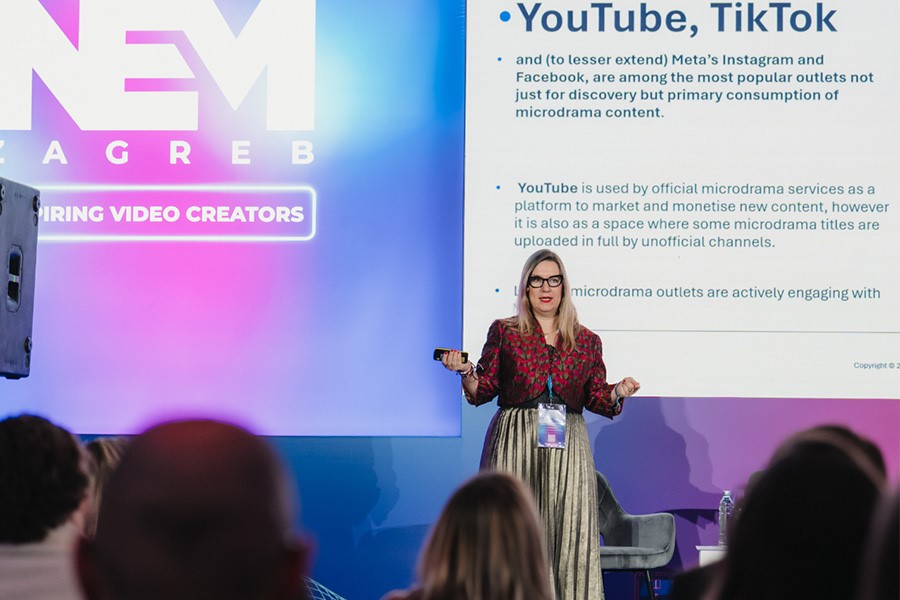

At this week’s NEM Zagreb conference, María Rúa Aguete, Head of Media and Entertainment at Omdia, unveiled groundbreaking insights that signal a historic transformation in the US pay-TV market. According to Omdia’s latest forecasts, YouTube TV is on track to surpass Charter and Comcast to become the largest pay-TV operator in the US by 2027.
Rúa Aguete highlighted the rapid growth of YouTube TV, which is poised to overtake traditional cable providers as the market leader. This marks a pivotal moment in the evolution of US television, as a virtual pay-TV provider takes the top spot for the first time.
US pay-TV market snapshot (Omdia data for end 2025):
• Charter: 11.4 million subscribers
• Comcast: 10.6 million subscribers
• YouTube TV: 9.3 million subscribers
US pay-TV market forecast (Omdia data for end-2027):
• YouTube TV: 10.4 million subscribers
• Charter: 10 million subscribers
• Comcast: 9.2 million subscribers
“This is an historic moment in US TV history, with the largest pay-TV operator about to be a virtual provider,” said Rúa Aguete. “YouTube TV has evolved into a comprehensive pay-TV bundle, offering linear channels, premium networks, and major sports properties — including exclusive NFL Sunday Ticket rights. This is not just a streaming service; it is the new face of US pay TV.”
YouTube’s dual power
Rúa Aguete emphasized that YouTube’s influence extends far beyond YouTube TV’s subscriber base. The broader YouTube platform, with almost 3 billion global users, is the world’s largest video ecosystem by a significant margin. “Netflix may reach 300 million subscribers globally, but compared with YouTube’s 3 billion users, it is not a dominant global player,” Rúa Aguete noted. “YouTube operates at a scale no subscription service can match.”
This dual positioning — as the world’s largest video platform and the soon-to-be #1 US pay-TV operator — gives YouTube a unique advantage in the rapidly evolving media landscape.
The streaming market
The latest Omdia data presented at NEM Zagreb also sheds light on the highly fragmented US streaming market. Despite its size, Netflix will account for just 15.7% of total US SVOD subscriptions by the end of 2025, underscoring the competitive nature of the industry. “The idea of Netflix as a dominant streaming service is a myth,” Rúa Aguete told delegates. “Consumers are distributing their attention — and their spending — across a wide range of platforms.”
US Streaming Leaders in 2025 (Omdia):
• Netflix: 88.7 million subscribers
• Amazon Prime Video: 64.7 million subscribers
• Disney+: 55.8 million subscribers
Other SVODs include
• Paramount+: 49.4 million subscribers
• HBO Max: 29.7 million subscribers
The shift toward hybrid platforms
With YouTube TV set to become the largest pay-TV operator by 2027 and YouTube itself already commanding the world’s largest video audience, Omdia’s research indicates a decisive shift in global media. Hybrid platforms that combine traditional TV offerings with digital-native content are emerging as the new center of gravity in the industry.
The Warner deal
Rúa Aguete also addressed the ongoing interest in Warner’s assets, emphasizing their strategic importance in Hollywood. “Paramount and Warner are among the most desirable assets in the industry,” she said. “Interest from companies like Netflix and Paramount in acquiring Warner reflects the growing need for scale, premium IP, and global distribution power.”
YouTube TV to become the largest pay-TV operator in the US by 2027