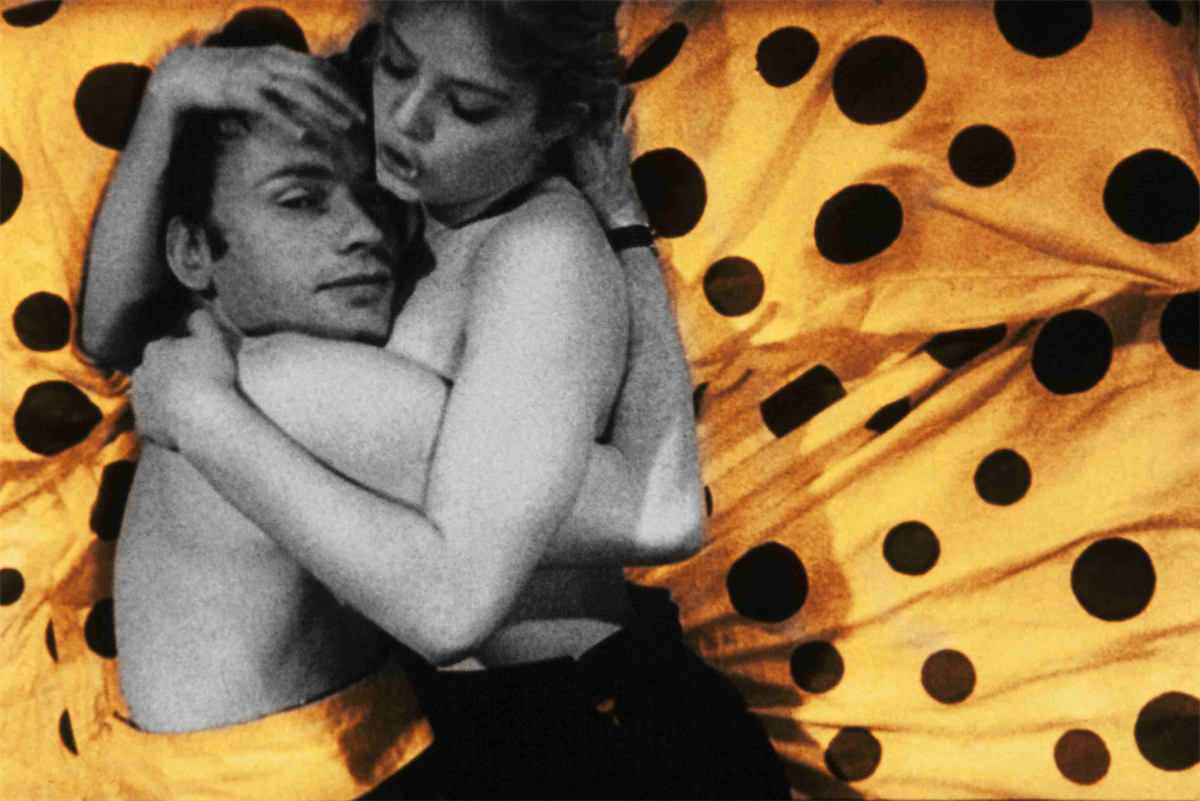

The 83rd Venice International Film Festival will open its Pre-opening night with a tribute to Venetian filmmaker Tinto Brass, one of the most non-conformist and original voices of Italian cinema. On Tuesday, September 1, 2026, Deadly Sweet (Col cuore in gola, 1967) will be screened at Sala Darsena on the Lido di Venezia as part of La Biennale di Venezia’s celebration of the director.
Directed and edited by Brass, Deadly Sweet is a pop thriller shot in London and starring Jean-Louis Trintignant and Ewa Aulin, with celebrated comic artist Guido Crepax serving as graphic consultant. The film will be presented in the world premiere of its restored 4K digital version, carried out by the CSC – Centro Sperimentale di Cinematografia in Rome with the vital support of Netflix, using materials provided by rights holder Compass Film.
The film is included in the Venice Classics programme of the 83rd Venice Film Festival, which will run from September 2 to 12, 2026. Its selection for the Pre-opening night marks a tribute to Brass as a key figure of the new Italian cinema of the 1960s, a filmmaker whose libertarian and provocative vision repeatedly challenged conventions, censorship and genre boundaries.
Presented Out of Competition at the 1967 Venice International Film Festival, Deadly Sweet was produced by Ermanno Donati and Luigi Carpentieri and is freely inspired by Sergio Donati’s novel Il sepolcro di carta. The screenplay was written by Tinto Brass, Francesco Longo and Pierre Lévy-Corti, with cinematography by Silvano Ippoliti, production design by Carmelo Patrono and music by Armando Trovajoli.
The film belongs to Brass’ so-called London phase, alongside Attraction (Nero su bianco, 1969) and Dropout (1970). Like those later works, Deadly Sweet is deeply marked by the visual culture of the 1960s, blending thriller mechanics with pop-art, comic-strip imagery and the atmosphere of Swinging London.
A distinctive element of the film is the collaboration with Guido Crepax, who was at the time one of Italy’s most popular cartoonists. Brass asked Crepax to create a series of illustrations for the action sequences, using them almost as a storyboard. “I even had Guido Crepax draw a whole series of illustrations for the action sequences, and they are quite rare because they are one of Crepax’s few works in colour,” Brass recalled. “In addition to being very beautiful, I used them as a storyboard.”
According to the original pressbook, Deadly Sweet tells “the story of a strange brief encounter between a disenchanted man and a girl with no illusions.” The encounter takes place in front of a dead body and lasts no more than one day and one night. Yet this short period is enough to revive in him the possibility of illusion, while in her it destroys every feeling except the biological instinct for survival. Their story unfolds in contemporary London, a city portrayed through its contradictions and its collision between reality, violence, desire and fantasy.
Speaking about the film in 1967, Brass described the protagonist as “a man who falls in love with a girl even when he meets her in front of a corpse.” He explained that the film is also “the story of a disillusionment,” as the male character imagines the woman to be something she is not.
The director also underlined the film’s visual and symbolic dimension, referring to “a series of emblematic characters and emblematic settings dominated by the laws of violence and sex,” and describing them as images drawn from the popular subconscious. For Brass, London offered the ideal backdrop to create a “comic-strip reality,” where the adventurous pace of the thriller interacts with a more complex reflection on the boundary between reality and imagination.
Born Giovanni Brass in Milan in 1933 to a Venetian family, Tinto Brass moved to Paris in 1957 after graduating in Law. There he worked with the Cinémathèque française under Henri Langlois, came into contact with the emerging Nouvelle Vague, and served as assistant to Joris Ivens and Roberto Rossellini.
His directing debut, In capo al mondo, later retitled Chi lavora è perduto, was presented at the Venice Film Festival in 1963 and immediately revealed his iconoclastic style. The film was targeted by censorship, opening a long series of battles through which Brass defended his personal, nonconformist and libertarian vision of cinema.
After Deadly Sweet, Brass continued to explore the relationship between freedom, desire, politics and representation in films such as The Howl (L’urlo), Attraction, Dropout and Vacation (La vacanza). In the following decades, with works including Salon Kitty, Caligula and especially The Key (La chiave), he entered a new phase focused on eroticism and the sexual liberation of female characters, achieving significant audience success.
Tinto Brass’ Restored Pop Thriller Deadly Sweet to Open the 83rd Venice Film Festival Preopening